
Of the 243 listed flights, it claimed to have operated 75 across the country after 1600 hours on Wednesday.
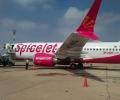
The two episodes on a single day have taken the total number of technical malfunction incidents involving SpiceJet aircraft to seven in the last 17 days.
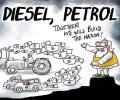
Petrol and diesel sales in the country fell in July over the previous month as the onset of monsoon chipped away demand in some sectors and restricted mobility, preliminary industry data showed. Diesel, the most widely used fuel in the country, saw consumption drop 13.1 per cent to 6.44 million tonnes from 7.39 million tonnes of demand in June. The arrival and intensity of monsoon weigh heavily on diesel demand in the country and consumption traditionally is lower in July-September than in April-June.

There has been a sharp recovery in the headline corporate earnings in the April-June 2023 quarter (Q1FY24), after a dismal showing by early bird companies. The combined net profit of the 983 listed companies that have declared their quarterly results, so far, was up 64.7 per cent year-on-year to record a high of Rs 2.68 trillion in the first quarter, but growth in earnings remained lopsided because most of the incremental gains came from a handful of companies. Moreover, the quarterly numbers showed a continued slowdown in revenue growth.
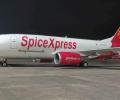
SpiceJet has failed to 'establish safe, efficient and reliable air services' under the terms of Rule 134 and Schedule XI of the Aircraft Rules, 1937, the notice issued by the DGCA stated.
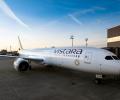
A senior DGCA official said that the flight has been grounded and a detailed probe has been ordered into the matter. All the passengers are safe.

Besides low interest rates, a reduction in active Covid cases and strong high-frequency macro data have lifted the sentiment of both corporate India and the stock markets.
The Centre has garnered around Rs 2,500-3,000 crore in the first five weeks after it imposed a windfall tax on oil and gas companies for the export of fuel, Business Standard has learnt. It is likely that the government will continue with the one-time tax till the Indian crude basket is above $80 a barrel, sources said. The next review of the windfall tax on oil companies is early next week.

Reliance Industries will sell 20 per cent stake in its oil and chemicals business to Saudi oil giant Aramco for about $ 15 billion and nearly half of its fuel retail business to BP of UK for Rs 7,000 crore. Aramco, the world's biggest crude exporter, will also supply Reliance's twin-refineries at Jamnagar in Gujarat with 7,00,000 barrels of oil a day on a long-term basis, Ambani said.

The letter shared with the media on Saturday comes amid Maharashtra losing several big-ticket projects to neighbouring Gujarat.
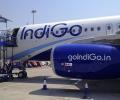
At Rs 919 crore, InterGlobe Aviation, the parent firm of low-cost airline IndiGo, posted its best-ever fourth quarterly net profit in the January-to-March quarter (Q4) of financial year 2022-23 (FY23). The bottom-line, however, was lower than the Street's expectations where estimates ranged from Rs 1,160 crore to Rs 2,180 crore. On the bourses, shares of IndiGo have added just 30 paise (0.01 per cent) since the announcement of the Q4-FY23 results on May 18.

Thanks to a $5.7 billion deal with Facebook, a Rs 53,125 crore rights issue and more stake sale to companies such as Saudi Aramco, the target is likely to be achieved by December.
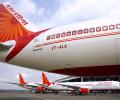
In a LinkedIn post on Wednesday, February 15, night, Nipun Aggarwal had said Air India, in addition to the order of 470 planes, had the option to purchase 370 aircraft from Airbus and Boeing.
While the Union Cabinet had in November last year approved the sale of the government's entire 52.98 per cent stake in BPCL, offers seeking expression of interest (EoI), or bids showing interest in buying its stake, were invited only on March 7. The EoI submission deadline was May 2, but on March 31 it was extended up to June 13. On Wednesday, the government said this deadline is further being extended up to July 31.

'Windows shook and rattled, and the thunderous growl of the engines doused even the sound of our noisy helicopter till such time the plane had lifted itself into the skies and disappeared from view.'

Airlines have to deal with high operating costs - fuel, taxation, airport charges - in a very competitive environment.
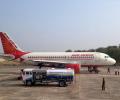
When the Tatas re-boarded Air India on January 27 last year, the price of aviation turbine fuel was at over Rs 80,000 per kilolitre. Rupee was trading at around Rs 74 to a US dollar. The Omicron variant of Covid-19 was in prevalence - barely a week earlier, India had reported over 340,000 cases on a single day. Seven-day home quarantine of international travellers was the norm.
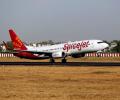
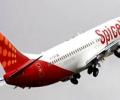
Aviation regulator DGCA conducted 53 spot checks on 48 SpiceJet aircraft between July 9 and July 13 and it did not find any major safety violations, Minister of State for Civil Aviation V K Singh said on Monday. "However, as a safety measure, the Directorate General of Civil Aviation (DGCA) ordered SpiceJet to use certain identified aircraft (10) for operations only after confirming to the regulator that all reported defects/malfunctions are rectified," Singh said in his written reply in Rajya Sabha. SpiceJet planes were involved in at least eight technical malfunction incidents in the 18-day period starting June 19, following which the DGCA had on July 6 issued a show-cause notice to the airline, stating that "poor internal safety oversight" and "inadequate maintenance actions" have resulted in degradation of safety margins.

Coordination between defence and civilian authorities has freed up airspace for commercial airlines in India, resulting in routes becoming shorter and costs coming down, apart from mitigating pollution. "Due to various restrictions of the military, only about 58 per cent of the Indian airspace was being utilised. It is close to 70 per cent now," said an official of the Airports Authority of India (AAI). Officials of the AAI said to date 119 routes had been shortened. Sources said since December 2020 the cumulative savings of airlines had been close to Rs 200 crore while there was a reduction in emission of around 45,000 tonnes of carbon.

'Just because of my background and poor academic qualifications, most people disbelieve what I have done.'
The civil aviation ministry has mandated airlines and ground-handling companies to phase out airport equipment older than 12 years and switch to electric or fuel-efficient variants by May 2022. While companies have welcomed the ministry's green initiative, they said that the deadline for implementation is tight. This is especially in the wake of financial challenges faced by the aviation sector during the pandemic.
Aviation companies were in focus with all the three airliners SpiceJet, InterGlobe Aviation and Jet Airways adding in the range of 2% to 3% on the BSE
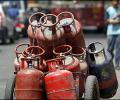
The price of subsidised cooking gas was on Tuesday hiked by over Rs 2 per cylinder, the sixth increase in rates in five months, while that of jet fuel was raised by a steep 7.3 per cent in step with global trends.

During these eight weeks, the budget carrier will be subjected to "enhanced surveillance" by the Directorate General of Civil Aviation.
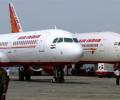
Currency depreciation also hits earnings of all domestic carriers
The government on Friday slapped an export tax on petrol, diesel and jet fuel (ATF) while also joining nations like the UK in imposing a windfall tax on crude oil produced locally. A Rs 6 per litre tax on export of petrol and ATF and Rs 13 per litre tax on export of diesel is effective from July 1, finance ministry notifications showed. Additionally, a Rs 23,250 per tonne tax was levied on crude oil produced domestically.

The three state-owned oil companies have decided to defer snapping fuel supplies to Air India. The airline owes the three firms over Rs 5,000 crore in past fuel bills.
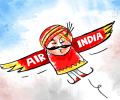
The Tata Group-owned Air India has readied a five-year transformation plan, which is expected to take its domestic market share to 30 per cent, up from 8.4 per cent logged in June. IndiGo leads with a market share of 58.8 per cent. The transformation plan--Vihaan.AI-unveiled on Thursday revolves around tripling the domestic market share with investments in new aircraft, technology and improvements in customer service.

Strong passenger growth will help domestic airlines improve their top line and margins.

The order, valued at 'nearly $9 billion at list prices', was signed at Dubai Air Show 2021 on Tuesday.

Due to the group's presence across multiple businesses, it is in a unique position in the aviation industry to bring the best of talents.
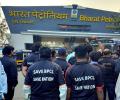
"The Corporation has decided to offer a voluntary retirement scheme, with a view to enable employees who are not in a position to continue in service of the Corporation due to various personal reasons, to request for grant of voluntary retirement from the services of the Corporation," Bharat Petroleum Corp Ltd (BPCL) said in an internal notice to its employees.
Failure to reinstate salary even two years after the drastic cuts has landed the airline industry in a massive industrial relation crisis. While employees of Air India had organised a strike back in 2011, it is for the first time that private airlines are facing serious stress related to workers. IndiGo witnessed two of them, back to back. In the first instance, around 50 per cent of the IndiGo flights were delayed as a large number of crew members went on mass sick leave, apparently to participate in a rival airline's walk-in job interview.
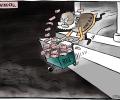
The windfall taxes on domestic crude oil production and fuel exports will generate close to $12 billion (Rs 94,800 crore) for the government in the remainder of the current fiscal while trimming profits of firms such as Reliance Industries Ltd and ONGC, Moody's Investors Service said Tuesday. On July 1, the government imposed windfall gain taxes on the export of petrol, diesel and aviation turbine fuel (ATF), and on the domestic production of crude oil. It has also mandated exporters to meet the requirements of the domestic market first.
Competition promotes innovation in the business model, creating sustainable value.

He also assured the kin of victims that steps would be taken to get them compensation in line with an international convention of International Civil Aviation Organisation (ICAO). Taking stock of the crash of the Dubai-Kozhikode AIE flight in Kozhikode and the relief measures, the minister said pilot in-command of the plane, Captain Deepak Vasant Sathe, among those killed in the accident, was one of the most experienced commanders with more than 10,000 flying hours.

The government is keen to close the sale before March 31, 2021, to help meet a record Rs 2.1 lakh crore target which Finance Minister Nirmala Sitharaman has set from divestment proceeds in the Budget for 2020-21.

'I hope they all survive, but it is a tough world.' 'The carriers who are already established are already struggling.'
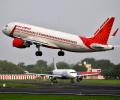
The Tata group-owned Air India will induct over 90 aircraft in two years as it looks to widen its footprint and grab a larger market share. The plan includes 56 planes from the mega aircraft order that the airline has now finalised with Airbus and Boeing. These will be in addition to previously announced leases of 36 planes that include Airbus A320Neo, A321Neo, and Boeing 777 aircraft.
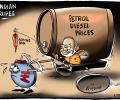
5 commodities namely crude oil, natural gas, petrol, diesel, and aviation turbine fuel (ATF) were kept out of GST's purview given the revenue dependence of state governments on these sectors.
